
Overview
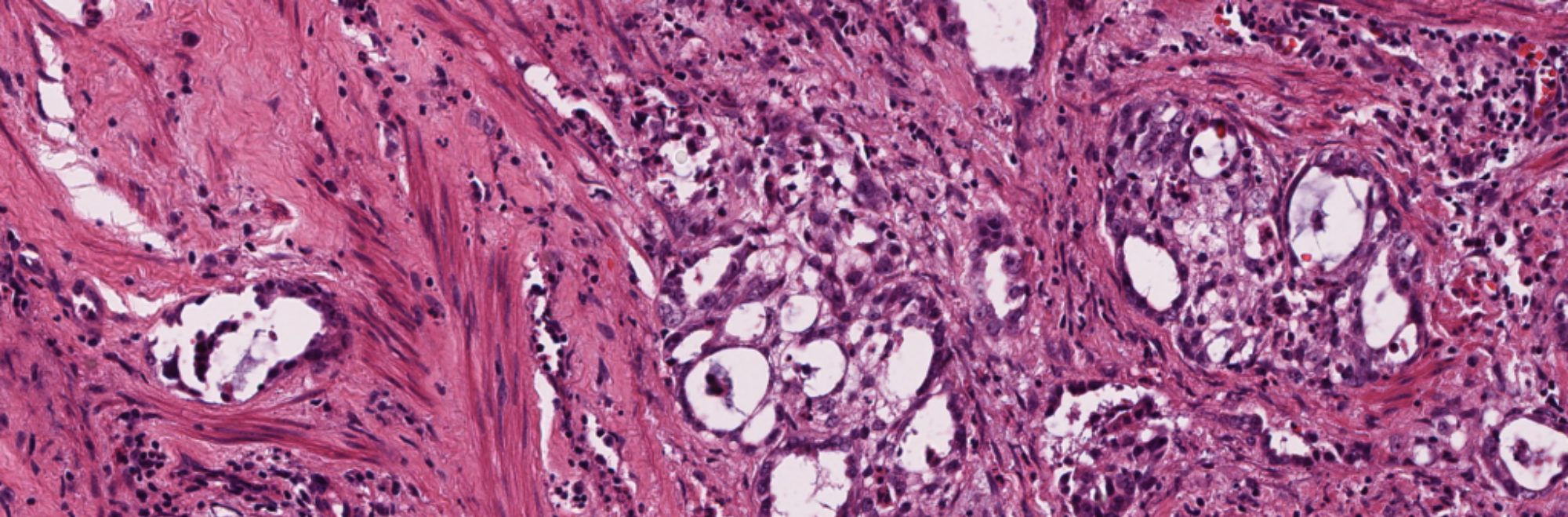
These are one-year positions combining clinical and research experience with our GU faculty. There are typically four full-time fellows. The material comprises radical prostatectomy specimens, teaching sets covering the entire spectrum of urological pathology, and an active personal consult service. A major role of the fellow is in participation in the research projects covering diverse subjects relating to genitourinary pathology.
Clinical Fellowship
The Genitourinary Pathology Clinical Fellowship is a one-year, nonstandard clinical fellowship designed to provide intensive, subspecialty training in the diagnosis, reporting, quality assurance, clinical communication, and scholarly investigation of diseases of the prostate, bladder, kidney, testis, and other organs of the genitourinary tract. The fellowship combines high-volume clinical service responsibilities with structured faculty supervision, formal consensus review, multidisciplinary tumor board participation, teaching activities, and mentored research. The fellow works within a highly specialized academic genitourinary pathology division and participates in the evaluation of complex biopsy, resection, in-house surgical pathology, outside consultation, and confirming consultation cases. The fellowship’s clinical material includes the full spectrum of urologic pathology, including benign, inflammatory, pre-neoplastic, malignant, recurrent, diagnostically challenging, and treatment-related lesions.
The clinical component of the fellowship is centered on progressive responsibility in genitourinary surgical pathology. The fellow previews cases, reviews all relevant clinical documentation, compares submitted materials with prior pathology reports and outside diagnoses, evaluates microscopic findings, formulates preliminary diagnostic impressions, and prepares cases for faculty sign-out. The orientation materials specify that fellows preview cases in the afternoon and sign out the following morning, review submitted documentation and EPIC records, including outside reports and prior pathology, use standardized diagnostic macros to ensure reports are accurate and unambiguous, mark areas of diagnostic concern on slides, and maintain a competency table documenting cases reviewed and signed off by attending physicians.
The fellowship provides exposure to a substantial subspecialty consult service, with more than 20 consultation cases per day. Consultation material is largely prostate pathology, followed by bladder, kidney, testis, and other genitourinary specimens. Fellows are responsible for organizing consultation materials, comparing proposed diagnoses with outside diagnoses, summarizing relevant clinical information, verifying that patient identifiers and outside case numbers match across paperwork, outside reports, and slides, and presenting cases efficiently at sign-out. For cancer resection cases, fellows prepare appropriate synoptic materials for review, and they may request additional levels, recuts, immunohistochemical stains, or ancillary studies when medically indicated and after consideration of the case status.
A central objective of the fellowship is to develop advanced diagnostic competence in genitourinary pathology through daily faculty interaction and formal consensus review. Fellows attend a daily genitourinary consensus conference held Monday through Friday at 12:30 p.m., with in-person review on selected days using a multiheaded microscope and remote participation on other days. During these sessions, fellows present diagnostically challenging, educational, or quality-assurance-sensitive cases to attending genitourinary pathologists. Cases may involve questions of tumor classification, grading, staging, invasion, margin status, precursor lesions, immunohistochemical interpretation, frozen-section correlation, or discrepancies between in-house and outside diagnoses.
The fellowship includes rigorous quality assurance and patient-safety training. Fellows and faculty are expected to bring cases liberally to the divisional GU Quality Assurance conference when there are questions regarding diagnosis, sampling, interpretation of immunostains, or other case-management issues. Required QA review categories include all new tumor cases, recurrent tumors with new or different findings, frozen section–permanent section discrepancies, confirming consultations in which the division is considering a diagnosis different from the original outside diagnosis, cases qualifying for tissue committee flagging, difficult or problematic cases, and cases with issues arising during GU Tumor Board.
The fellow receives specialized training in intraoperative consultation and frozen-section quality assurance. Frozen sections with major operative implications, including those that may stop a surgery, lead to resection of an additional organ, or present diagnostic difficulty, require attending review before call-back when an attending is available within the clinically relevant time frame. All frozen-section cases require documentation correlating frozen-section and permanent-section diagnoses; discrepant cases must be flagged for tissue committee review and include documentation explaining the nature and cause of the discrepancy, such as interpretation, block sampling, tissue sampling, technical factors, or lack of important clinical or prior pathologic information. Significant discrepancies, such as a change in margin status from positive to negative or negative to positive for cancer, require clinician notification and documentation of the communication.
The fellow is trained to apply national cancer reporting standards to genitourinary malignancies. Cancer cases are signed out using CAP Cancer Diagnosis Protocols, and staging information is reported as a final synoptic TNM stage. Fellows are expected to incorporate relevant information from operative notes, tumor board discussions, e-mail communication with surgeons, and recent surgical or cytologic specimens when such information affects staging. The fellow also contributes to the quality of gross dictations and final report section summaries, ensuring that gross findings correlate with submitted sections and that required elements for CAP cancer reporting are captured.
The position requires advanced knowledge of surgical pathology reporting systems, specimen processing, histologic interpretation, immunohistochemistry, tumor grading and staging, ancillary testing, and clinicopathologic correlation. Fellows review H&E-stained slides, assess the need for recuts, levels, immunostains, FISH, or other ancillary studies, and integrate those results into final diagnostic recommendations. When immunostains are used to guide lesion classification, the case is often returned to GU QA so the team can review the stains with the H&E morphology and reach the best final diagnosis and terminology. This process also supports fellow and resident education by reinforcing the characteristic immunoprofiles of genitourinary lesions.
The fellow participates in multidisciplinary patient care through weekly GU Tumor Board, held every Monday from 7:00 to 8:00 a.m. The fellow prepares pathology presentations for requested cases, including final diagnoses and representative microscopic images, and participates in multidisciplinary discussion with urology, radiology, oncology, and pathology colleagues. Tumor board responsibilities include preparing PowerPoint slide decks, reviewing diagnostic and staging information, responding to questions from clinicians, and ensuring that pathology interpretation is integrated into clinical decision-making.
The fellowship has a formal academic and research component. Each fellow is expected to select one or two research projects suitable for abstract submission to the United States and Canadian Academy of Pathology, meet regularly with a faculty mentor, present monthly progress reports, and complete a manuscript by March. Fellows also participate in a monthly GU journal club, held on the second Tuesday of each month, where they select and discuss recent genitourinary pathology literature. These activities are intended to develop the fellow’s ability to critically evaluate the medical literature, contribute to scholarly work, and apply emerging diagnostic and scientific knowledge to subspecialty practice.
The fellowship also includes teaching and supervisory responsibilities appropriate to an advanced subspecialty physician-in-training. Fellows work with surgical pathology residents and other pathology trainees during case preview, sign-out, QA conference, tumor board preparation, and discussion of specimen processing. They assist residents in understanding GU specimen protocols, diagnostic criteria, CAP reporting elements, gross-microscopic correlation, and the clinical significance of pathologic findings. The oversight policy emphasizes that fellows and faculty share responsibility for the quality of gross dictations and section summaries, and that residents must be taught to follow tumor specimen processing protocols so that all necessary diagnostic information can be generated in the final report.
The fellow’s responsibilities also include documentation and communication duties that are essential to patient safety and laboratory quality. For cases reviewed at QA or by an attending pathologist, the fellow ensures that the conference or attending reviewer is documented in the report or appropriate QA fields. For frozen sections shown to an attending, the attending is documented on the frozen-section form. The fellow also learns policies for clinician notification of critical diagnoses, including unexpected findings of serious consequence, conditions requiring prompt treatment, significant discrepancies with outside diagnoses, and other findings that require telephone or e-mail communication in addition to the written pathology report.
Overall, the Genitourinary Pathology Clinical Fellowship is a highly specialized, physician-level training position requiring completion of medical education and prior pathology training. The position requires the application of advanced medical knowledge to complex diagnostic specimens, the ability to synthesize clinical history with morphologic and ancillary findings, familiarity with national cancer reporting and staging standards, participation in high-level multidisciplinary clinical conferences, and scholarly engagement in subspecialty research. Through daily clinical service, faculty-supervised sign-out, active consultation work, quality assurance review, tumor board participation, resident teaching, journal club, and mentored research, the fellow develops expertise necessary for independent subspecialty practice in academic or advanced clinical genitourinary pathology.
Advanced Fellowship / Faculty Assistant
In addition to all the activities and responsibilities listed for fellows, the faculty assistant participates in independent sign out of in-house genitourinary surgical pathology services, including both biopsy and resection material. The program includes exposure to high-volume in-house GU services, with review of cases with pathology residents. The GU1 service includes resident involvement in previewing biopsies and resections, while the GU2 service requires the faculty assistant to preview, format, and draft reports independently in EPIC, as well as handle a defined number of confirming consultation cases. This structure provides the faculty assistant with graduated responsibility in case triage, microscopic diagnosis, report preparation, clinicopathologic correlation, and communication with faculty, residents, and support staff.
For assistants with sign-out privileges, the program requires a period of routine sign-out observation before any independent sign-out activity. Approval for independent GU subspecialty sign-out requires review of all slides from at least one day’s caseload by an attending pathologist. Even after approval, specified high-risk case categories must be reviewed by GU faculty or presented at QA, including new cancer diagnoses, recurrent tumors with unexpected findings, resection specimens in which cancer is clinically suspected but not identified, frozen/permanent discrepancies, major diagnostic amendments, consults with potential disagreement from the outside diagnosis, tissue committee–flagged cases, tumor board issues, and difficult cases such as urothelial carcinoma in situ.
Applying
To apply, please download our application form and submit it by email to the program director.
Send the application (via email) to:
Andres Matoso, M.D.
The Johns Hopkins Hospital
Department of Pathology, Weinberg 2242
401 N. Broadway
Baltimore, Maryland 21231
Phone: 410-955-3580
Fax: 410-955-0115
Email: [email protected]
Current Fellows
Carla Calagua Bedoya, M.D.

Carla Calagua is a Genitourinary Pathology Fellow at Johns Hopkins Hospital. She completed her residency in Anatomic and Clinical Pathology at Mount Sinai West/Morningside in New York City, where she served as Chief Resident during her fourth year. After graduation, she has accepted a position at Beth Israel Deaconess Medical Center in Boston, MA.
Originally trained as a physician at the Universidad de San Martin de Porres in Lima, Peru, she conducted extensive translational research in prostate cancer at Beth Israel Deaconess Medical Center prior to beginning her pathology training.
Outside of medicine, Carla enjoys long walks, listening to music, playing video games, and spending time with her husband and son.
Jiejun Wu, M.D., Ph.D.
Jiejun Wu, MD, PhD, is a clinical fellow in Genitourinary Pathology at Johns Hopkins. He earned his MD in China and a PhD in Molecular Genetics from The Ohio State University. He completed his residency in Anatomic and Clinical Pathology at the University of California, Davis, and a fellowship in Molecular Genetic Pathology at the University of California, San Francisco.
His academic focus is on integrating the transformative era in urologic pathology, where molecular diagnostics are not only deepening our understanding of diseases but also increasingly guiding clinical decision-making.
Guannan Zhang, M.D., Ph.D.
Guannan Zhang, originally from China, earned her Ph.D. in Pharmacology from St. John’s University in New York and her M.D. from Dalian Medical University in China. She completed her pathology residency at the University of Miami, where she developed a strong interest in Genitourinary (GU) and Bone and Soft Tissue pathology. She is currently pursuing a GU pathology fellowship at Johns Hopkins and will be working as an Instructor in GU and Head and Neck Pathology at Mass General Brigham starting in September 2026.
Her academic interests include challenging cases, complex clinical correlations, and translational pathology. She is also passionate about teaching and actively involved in trainee education.
Outside of work, she enjoys spending time with her husband and daughter.
Former Fellows
2024-2025
Ciera Mangone, M.D.
Ciera was born and raised in rural Pennsylvania. She received her B.S. in Pharmaceutical Chemistry at Lehigh University in Bethlehem, PA, and went on to medical school at Saint Louis University in Missouri. While in medical school, she completed a post-sophomore fellowship in pathology, acting as a first-year resident in the pathology department for one year. It was during this year that she discovered her love of surgical pathology, in particular prostate pathology. She moved back to the east coast to complete her residency in Anatomic and Clinical Pathology at the University of Pennsylvania in Philadelphia, where her interest in genitourinary pathology continued to grow along with a passion for education. She enjoyed being a part of medical school and resident teaching and hopes to continue to be involved in trainee education throughout her career. She is currently working as Surgical Pathology Assistant at the Johns Hopkins Hospital, furthering her knowledge in general surgical pathology. She will then be pursuing a Genitourinary Pathology fellowship at Johns Hopkins with a special interest in prostate pathology. In her free time, Ciera enjoys relaxing with a good book and spending time with her husband, toddler, two dogs, and pet pig.

Swati Bhardwaj, M.B.B.S., M.D.
Swati is from New Delhi, India. She completed medical school at Vardhman Mahavir Medical College & Safdarjung Hospital, New Delhi, where she was awarded a Gold Medal. She did her residency training at the Icahn School of Medicine at Mount Sinai Hospital, New York. She has a passion for medical education and teaching and was awarded the Excellence in Teaching Award for innovation, commitment and excellence in medical education. She has authored and co-authored 5 book chapters on urologic and gynecologic pathology. She is also actively involved in research and has been the recipient of the “Proof of Concept Award” for research funding during residency. She has authored multiple research papers and was awarded the First Prize for her poster at CAP21. She is also actively involved in organized medicine serving as an Ex Officio Governor for the College of American Pathologists (CAP), has been the Chair of the CAP Residents Forum, a past delegate to the American Medical Association (AMA), and an USCAP Ambassador, among other roles. In her free time, she likes to paint, cook, and spend time with family.
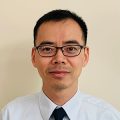
Ruihe (Ray) Lin, M.D., Ph.D.
Ruihe (Ray) received his medical education in Shanghai, China. After several years of clinical work as a surgeon, he completed a PhD training in Shanghai followed by postdoctoral translational research at Thomas Jefferson University. He completed AP/CP pathology residency training at Thomas Jefferson University Hospital followed by surgical pathology fellowship training at the University of Pennsylvania. During residency, he became interested in genitourinary pathology, and pursued research projects with several original publications in the area. After fellowship training in Urologic Pathology at Johns Hopkins, Ray plans to continue a career in academic pathology. He enjoys cooking, traveling, music, playing sports, and spending time with family.
Ray will join the Department of Pathology and Laboratory Medicine of the Perelman School of Medicine at the University of Pennsylvania as an Assistant Professor in 2025 after his fellowship training.
2023-2024

Léonie Beauchamp, M.D.
Léonie grew up in Québec, Canada. She developed an interest in pathology early in medical school, inspired by the beauty of human histology. She completed medical training at Université de Montréal in 2013. She then completed pathology residency at the Centre Hospitalier Universitaire de l’Université de Montréal (CHUM). Léonie became interested in urologic pathology while working as a pathologist in New-Brunswick, Canada. Since college, she has also developed a passion for teaching. After graduation from her fellowship, she will pursue an academic career centered on medical education at the University of Toronto.
Outside of pathology and medical education, Léonie likes to spend time with her children and family, travel and play board games.

Eric Erak, M.D.
Eric earned his M.D. from the University of Medical Science (UCIMED) in Costa Rica and completed his residency training in Pathology at the University of Costa Rica (UCR). Once Eric completed his training, he gained interest in Genitourinary Pathology, especially prostate cancer, and applied for a one-year post-doctoral clinical genitourinary fellowship with Dr. Jonathan Epstein at Johns Hopkins Hospital. After completion, he joined Dr. Tamara Lotan in her lab to continue Genitourinary Pathology research. He will repeat residency training in the US to relocate here with his family permanently. When not working, Eric enjoys watching soccer, playing tennis, playing Call of Duty, and traveling with his wife.

Mohammad Salimian, M.D.
Mohammad grew up in Baltimore and completed his undergraduate work in physiology and neurobiology at University of Maryland – College Park. He continued on to medical school at American University of the Caribbean and went on to AP/CP residency at Orlando Health in Orlando, Florida. Upon completion of residency Mohammad moved back to Baltimore to complete a genitourinary fellowship at Johns Hopkins. When not working, Mohammad enjoys spending time with friends and family, traveling, and reading.